How to Choose a Dried Casings Supplier for Sausage Production
To choose the right dried casings supplier, I recommend evaluating four areas together: casing performance, product consistency, supply reliability, and technical support. A low purchase price is not enough if the casings split during stuffing, produce inconsistent diameter, or arrive with unclear storage and conditioning instructions. Before approving a supplier, I would compare samples under your actual filling process, verify specifications in writing, and review the supplier’s ability to support repeat orders.
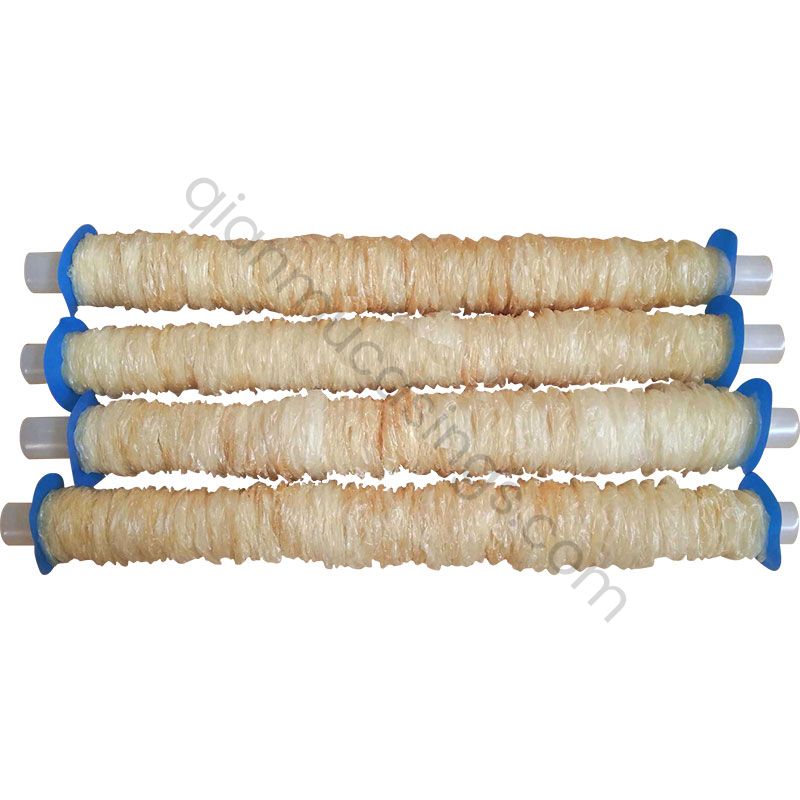
Dried casings can refer to natural casings preserved and dried for storage, or to other casing formats supplied in a dry condition. Because construction and handling requirements differ, the first step is to define the casing material, diameter, length, preparation method, and sausage application. A qualified dried casings supplier should help you match these requirements instead of offering a one-size-fits-all product.
Start with Your Sausage Production Requirements
The best supplier depends on the product you manufacture and the process used in your facility. A supplier may be suitable for dry-cured sausage but less suitable for fresh sausage, smoked sausage, cooked sausage, or products requiring a particular bite. I suggest documenting your current production conditions before comparing quotations.
Finished sausage type and target weight
Required casing material and appearance
Nominal diameter and acceptable size tolerance
Manual or automatic stuffing equipment
Stuffing speed, linking method, and filling pressure
Cooking, smoking, fermentation, or drying conditions
Required packing format, shelf-life expectations, and storage conditions
Diameter should be expressed in millimeters, while casing length should be stated in meters or another clearly defined unit. If your products use several sizes, prepare a product matrix instead of evaluating one sample in isolation. This makes it easier to identify whether a supplier can support your complete range rather than only one successful trial.
Use a Step-by-Step Supplier Selection Process
1. Confirm the Casing Type and Intended Application
Ask the supplier to identify exactly what is being offered, including the casing material, preservation method, preparation condition, and recommended use. Natural casings may provide a traditional appearance and texture, while manufactured options may offer more standardized dimensions and handling characteristics. Neither option is automatically better for every sausage line, so the decision should follow the product specification.
For dry or semi-dry sausage, confirm that the casing is appropriate for the planned fermentation and moisture-loss process. For cooked or smoked products, ask how the casing behaves during heating, cooling, and handling. If the supplier cannot explain the intended application clearly, treat that uncertainty as a sourcing risk.
2. Request a Complete Technical Specification
A professional dried casings supplier should provide more than a product name and a price. Request information about size range, average length, visual grading, packing method, storage conditions, conditioning instructions, and traceability information where available. The specification should also identify the units used, because unclear terms such as “large,” “medium,” or “standard” can create avoidable purchasing disputes.
For internal approval, I recommend creating a comparison table with measurable fields. Useful fields include casing diameter in millimeters, average pieces per pack, net weight in kilograms, recommended conditioning time in hours, and acceptable defect categories. These data points allow purchasing, quality, and production teams to evaluate the same product using the same criteria.
| Evaluation area | Questions to ask | Why it matters |
|---|---|---|
| Dimensions | What diameter and length ranges are available? | Dimensions affect product weight, appearance, and stuffing settings. |
| Conditioning | How should the casing be softened before use? | Correct preparation can reduce handling variation and breakage. |
| Packaging | How is the product protected during storage and transport? | Packaging affects cleanliness, moisture protection, and warehouse handling. |
| Quality control | How are size, defects, and lot information recorded? | Documented controls improve repeat-order evaluation. |
3. Test Samples on Your Own Equipment
Supplier samples should be evaluated on the same equipment, filling material, and operating settings used in regular production. A casing that performs well in a small manual test may behave differently on a high-speed automatic line. I recommend recording breakage, slippage, air retention, linking performance, appearance, and finished-product handling.
Run the sample through at least three representative production batches before making a final decision when your schedule allows. This is not a universal certification requirement; it is a practical way to observe variation across repeated use. Record the conditioning process, filling pressure, operator, production date, and lot number so that the results can be compared fairly.
Evaluate both the casing and the finished sausage. Check whether the casing remains secure after smoking, cooking, drying, or refrigeration, depending on the product. If the casing is intended for a premium product, also assess color, surface appearance, bite, peelability, and how consistently it presents at retail or food-service use.
4. Review Quality and Supply Controls
Consistency is one of the most important differences between a convenient supplier and a dependable supplier. Ask how incoming materials are selected, how batches are graded, and how nonconforming products are handled. You should also understand whether replacement or corrective-action procedures are defined when a shipment does not meet the agreed specification.
Supply stability includes more than having stock available today. Review the supplier’s standard lead time, production capacity, packing schedule, export experience, and ability to support repeat orders. For planning purposes, buyers should define an acceptable lead-time window, such as 30 days, rather than relying on vague promises like “fast delivery.”
Qianmu supply professional and honest service.
Also review packaging and storage instructions before placing a larger order. Dried casing products can be affected by moisture, temperature, contamination, and rough handling, depending on their material and preservation method. The supplier should provide practical guidance for warehouse conditions, opened-pack handling, and stock rotation without making unsupported shelf-life claims.
Key Decision Points When Comparing Suppliers
Product Consistency Versus Initial Price
The lowest unit price may not represent the lowest production cost. If a casing creates more waste, slower stuffing, rework, or inconsistent finished weights, the total cost can increase even when the quotation looks attractive. I suggest comparing usable casing output, labor impact, and production interruptions alongside the purchase price.
Customization and Size Availability
Some sausage producers require a narrow diameter range, specific lengths, particular presentation, or customized packing. Ask whether the supplier can quote different specifications without mixing grades or changing the agreed standard between orders. A supplier with clear customization procedures can be more useful than one offering many options without documentation.
Communication and Technical Support
Technical support is especially important when you are changing casing type, equipment, or product formulation. Ask whether the supplier can provide conditioning guidance, stuffing recommendations, sample evaluation support, and troubleshooting responses. A responsive supplier should explain what is known, what requires testing, and what information is needed before making a recommendation.
As a sausage casing supplier, Qianmu can support buyers by discussing casing selection according to product type, size, packing requirements, and procurement conditions. We recommend confirming the specification before quotation and using samples to validate performance on the buyer’s own production line. This approach helps connect product supply with practical manufacturing requirements rather than treating the casing as a commodity purchased on price alone.
Common Mistakes to Avoid
Choosing by Price Alone
Price-only comparisons often ignore size variation, usable length, defect rates, preparation labor, and freight-related packing differences. A lower quotation may also cover a different grade or less precise specification. Always compare equivalent units, packaging, and quality requirements before selecting the lower offer.
Skipping the Production Trial
Product photographs and written specifications cannot fully show how a casing will behave on your line. Skipping a trial can lead to unexpected breakage, poor linking, or appearance problems after processing. A controlled sample test is usually a more reliable decision tool than a verbal assurance.
Leaving Conditioning Instructions Unclear
Dried products may require preparation before stuffing, and the correct method can depend on casing material and production conditions. Do not assume that the same soaking or softening procedure applies to every product. Ask for written instructions and record any changes made during the trial.
Failing to Define Acceptance Criteria
Terms such as “good quality,” “uniform size,” and “low breakage” are difficult to enforce without definitions. Before ordering, agree on the measurable specifications, inspection method, packaging details, and complaint process. This creates a clearer basis for cooperation when the product is inspected after delivery.
How to Improve Your Final Supplier Decision
I recommend using a weighted evaluation sheet so that different departments can contribute to the decision. For example, production can assess stuffing performance, quality can assess defects and traceability, purchasing can assess price and lead time, and sales or product development can assess appearance and market suitability. The exact weighting should reflect your business rather than a generic industry formula.
Product fit for the intended sausage application
Performance during repeated production trials
Specification clarity and batch consistency
Packaging, storage, and delivery reliability
Minimum order quantity and reorder flexibility
Communication speed and technical assistance
Total landed cost rather than unit price alone
Before approving a supplier, request a formal quotation that includes product description, size, packing, quantity, lead time, payment terms, and shipping basis. Keep the approved sample and written specification as a reference for future purchase orders. If your volumes are seasonal, discuss forecast sharing and replenishment planning early so that both parties can prepare for demand changes.
Key Takeaways
Define the casing material, size, preparation method, and sausage application before comparing suppliers.
Evaluate samples on your own stuffing equipment and production process.
Compare consistency, usable output, service, and total cost instead of focusing only on the quoted price.
Confirm written specifications, storage guidance, packing details, lead time, and complaint procedures.
Choose a supplier that can support repeat orders and communicate clearly when technical questions arise.
Conclusion: Selecting the Right Dried Casings Supplier
The right dried casings supplier is the one that can consistently meet your technical requirements, production conditions, quality expectations, and purchasing schedule. Start with a clear product specification, test samples under real operating conditions, and compare suppliers using documented criteria. This process reduces the risk of selecting a casing that appears suitable on paper but performs poorly in production.
If you are evaluating casing options for a new sausage product or replacing an existing source, prepare your target diameter, sausage type, monthly demand, equipment details, packing preference, and destination market requirements. Qianmu can review these details and provide a suitable sausage casing proposal for sample evaluation and commercial discussion. Contact our team with your specification so we can help you assess the appropriate dried casing solution for your production needs.
Contact us to discuss your requirements of dried casings supplier(de,ru,es). Our experienced sales team can help you identify the options that best suit your needs.


评论
发表评论